Getting your rental deposit back in Germany: deadlines, deductions and what to do
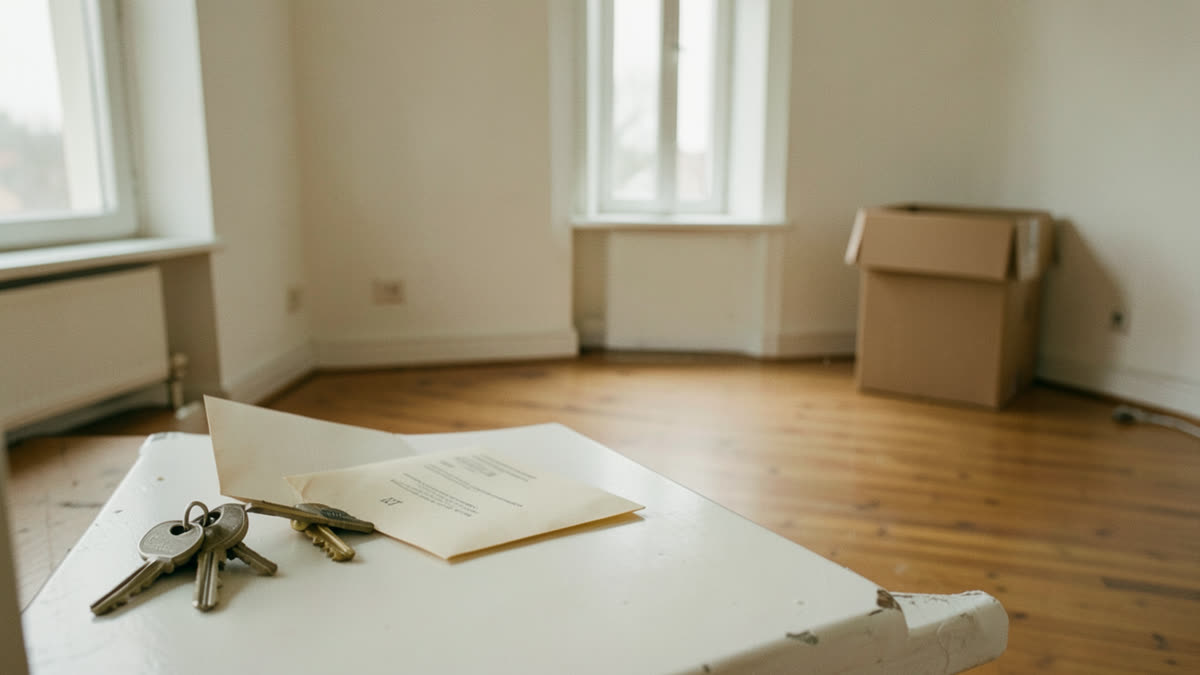
The keys are handed back, you’ve moved into your new place, and only the deposit is missing. With Berlin rents, that’s easily €2,000 to €4,000. The short version: German law sets no fixed deadline for returning a Kaution (rental deposit), but the landlord can’t wait forever either. This guide explains when the deposit is usually due, what may be deducted, how to claim it step by step, and what applies if you used a deposit guarantee or the building was sold.
When does the landlord have to return the deposit?
After you move out, the landlord may take a reasonable amount of time to check whether they still have claims against you. The law doesn’t give a number. Courts usually consider three to six months reasonable, sometimes a little shorter or longer depending on the case. If everything is clearly fine, the flat was handed back without defects and the rent is paid, that points to the shorter end. After that, the landlord has to settle up: deposit plus interest, minus justified claims, itemised so you can follow it.
There is one thing they may wait longer for: the Nebenkostenabrechnung (annual service charge statement). If the statement for your last year isn’t ready yet and a back payment is likely, the landlord may hold back a reasonable part of the deposit until it arrives. Reasonable means roughly what you are realistically likely to owe, often based on previous years. The rest must be paid out. If you got refunds in recent years, a large retention is hard to justify. The statement itself must reach you within twelve months of the end of the billing period (§ 556(3) BGB, the German Civil Code).
- Example: a deposit of €2,850 plus €40 interest. The service charge statement for your move-out year won’t arrive until next autumn, and back payments in recent years were around €150.
- Holding back about €150 to €250 is then usually defensible. The remaining €2,600 or so should reach you after the checking period.
- When the statement arrives, the retained amount is set off against it and the rest is paid out.
Interest: your deposit comes back with earnings
Under § 551 BGB, a landlord must keep a cash deposit separate from their own money, at least at the usual rate for savings with a three-month notice period. The interest belongs to you and is added to the deposit, so it must be paid back too. Over a long tenancy this adds up to more than you might think. In your letter, ask explicitly for proof of the account balance and interest. One exception: in student and youth halls of residence, the deposit does not have to earn interest.
What can the landlord deduct, and what not?
The deposit secures justified claims arising from the tenancy. Anything beyond that belongs to you.
- Allowed: unpaid rent and unpaid service charge back payments.
- Allowed: damage beyond normal wear and tear, such as burn marks on the parquet, a cracked sink, pet scratches on doors or large areas of ripped-out wall plugs. For older items, courts usually apply a “new for old” reduction, so you don’t pay the full price of a new one.
- Allowed: the cost of Schönheitsreparaturen (cosmetic redecoration), but only if the clause in your lease is valid and you didn’t do the work. They also usually have to give you a deadline to do the work yourself first. Many clauses with rigid schedules, or in flats handed over unrenovated, are invalid.
- Not allowed: normal wear and tear (Abnutzung) from ordinary living, for example slightly worn floors, faded walls, a normal number of plug holes, limescale marks.
- Not allowed: flat-rate deductions without a reason, like “cleaning €300” or “renovation €1,000”, if the landlord can’t say specifically what was needed and why.
- Not allowed: claims that have nothing to do with your tenancy.
Whether a redecoration clause is valid is one of the most common disputes in German tenancy law. If in doubt, have a Mieterverein (tenants’ association) check it before you pay or accept a deduction.
Handover protocol and photos: your best insurance
Most deposit disputes come down to one question: was that scratch already there when you moved in? If you can prove it, you’re in a much stronger position. So getting your deposit back really starts on move-in day. What to note down is also covered in our viewing checklist.
- When moving in: photograph every room, have defects written into the Übergabeprotokoll (handover protocol), note the meter readings. Keep the dated photos.
- When moving out: arrange a joint handover appointment and fill in a protocol that both sides sign. Ideally bring a second person as a witness.
- Don’t sign anything you disagree with. Add your objection in writing, for example “scratch in hallway was there at move-in, see move-in protocol”.
- On move-out day, photograph all rooms, floors, walls, bathroom and kitchen again, plus the meter readings and the keys you hand over.
- Get written confirmation that you returned the keys. Important deadlines start on that day.
If a protocol signed by both sides records the flat as in proper condition, the landlord usually can’t later rely on defects they could have spotted at the time. Hidden damage isn’t necessarily covered by that.
How to claim your deposit back, step by step
If several months pass with neither money nor a statement, work through it in this order:
- 1. Gather your documents: lease, proof of deposit payment, move-in and move-out protocols, photos, confirmation of key return.
- 2. Ask politely: a short email to the landlord or Hausverwaltung (property management) asking for the settlement and giving your current bank details resolves many cases.
- 3. Demand it in writing with a deadline: if nothing happens, send a letter by Einschreiben (registered mail), or alternatively fax or email with read receipt. Demand settlement and payment of the deposit plus interest and set a specific deadline, for example two weeks from receipt. State the amount and your IBAN. German is safest, but a clear letter in English is better than none.
- 4. Check deductions: if the landlord settles up, ask for each deduction to be explained individually and backed by invoices or quotes. Compare it with the protocol. You can demand the undisputed part right away.
- 5. Get help: Berlin tenants’ associations and the district tenant advice services (Mieterberatung) know these cases well, and many advise in English. Legal expenses insurance for tenancy (Mietrechtsschutz) may cover lawyer’s fees if you had it before the dispute began and its waiting period had passed.
- 6. Enforce it in court: if the landlord doesn’t react at all, a court payment order (Mahnverfahren) is a cheap route. The court responsible is the one for where you live. If you live in Berlin or abroad, that’s the central payment order court for Berlin and Brandenburg at the Amtsgericht Wedding; if you’ve moved to another German state, it’s the one there. You can apply online. If the landlord objects, the case goes to the local court (Amtsgericht). Where deductions are disputed, a lawsuit straight away usually makes more sense. Talk it through with a Mieterverein or a lawyer first.
Tip: if the checking period was already over and the landlord lets your deadline pass, they are usually in default (Verzug). From then on you can claim default interest and, in some cases, the cost of a lawyer.
When does your claim expire?
Your claim to get the deposit back is subject to the standard limitation period of three years (§ 195 BGB). It usually starts at the end of the year in which the claim became due, which is not move-out day but after the reasonable checking period has passed. Exactly when that was in your case can be disputed. So don’t wait until the last moment: deal with it within the first one or two years.
On the other side, the landlord’s claims for damage to the flat expire just six months after you return it (§ 548 BGB). That doesn’t automatically mean you get the full deposit after six months, though: according to a 2024 ruling of the Federal Court of Justice (BGH), the landlord can in many cases still set an expired claim off against the deposit (§ 215 BGB). Get advice before relying on it.
Deposit guarantee: get the certificate back
If you provided a Mietkautionsbürgschaft (bank guarantee) or a Kautionsversicherung (deposit insurance) instead of cash, there’s no money to pay back. Instead, the landlord must return the guarantee certificate (Bürgschaftsurkunde) once they have no more claims. This matters, because with many providers you keep paying the annual fee as long as the guarantee is active. Demand the certificate back with a deadline, just like a cash deposit, then send it to the provider to end the contract. Ask the provider what they need for cancellation. More on guarantees and alternatives in Renting without a deposit.
Building sold: who pays the deposit back?
If the building was sold during your tenancy, the new owner takes over the lease and is usually responsible for returning the deposit, even if they never received it from the old landlord (§ 566a BGB). If the new owner doesn’t pay, the same rule says the former landlord remains liable too. So write to your current landlord first and, if that gets you nowhere, to the old one as well.
Common mistakes that cost money
- “Living off” the deposit by not paying the last months’ rent. This is generally not allowed and gives the landlord unnecessary leverage.
- No photos and no protocol at move-out.
- Signing a protocol that lists defects you didn’t cause.
- Moving abroad without leaving a bank account and email address where you can be reached. A German account you keep open for a while makes things easier.
- Taking money privately from the incoming tenant for your deposit. You settle your deposit with the landlord, not with your successor. More in Finding a successor tenant in Berlin.
- Waiting years until the claim has expired.
By the way: if your next landlord wants a rent debt clearance certificate (Mietschuldenfreiheitsbescheinigung), ask your old landlord for it when you move out. Later, in the middle of a deposit dispute, it tends to get harder.
Budget for your next deposit
Old and new deposits often overlap by a few months. Plan for that and use your right to pay the new deposit in three instalments. The rules on amount, instalments and the deposit account are in Rental deposit in Berlin. Still looking? On Kiezfinder you post a free search order with your Kieze (neighbourhoods), budget and move-in date, and finders who know those areas let you know when something comes up. Kiezfinder is Berlin-only. You only pay a finder’s fee if you actually sign a lease: at most two months’ cold rent, agreed in advance.
Note: this article is not legal advice. For specific disputes, Berlin tenants’ associations, the district tenant advice services, the Verbraucherzentrale Berlin (consumer advice centre) or a tenancy lawyer can help.
Part of the guide: Moving to Berlin →