Rental deposit in Berlin: how much, how to pay, when you get it back
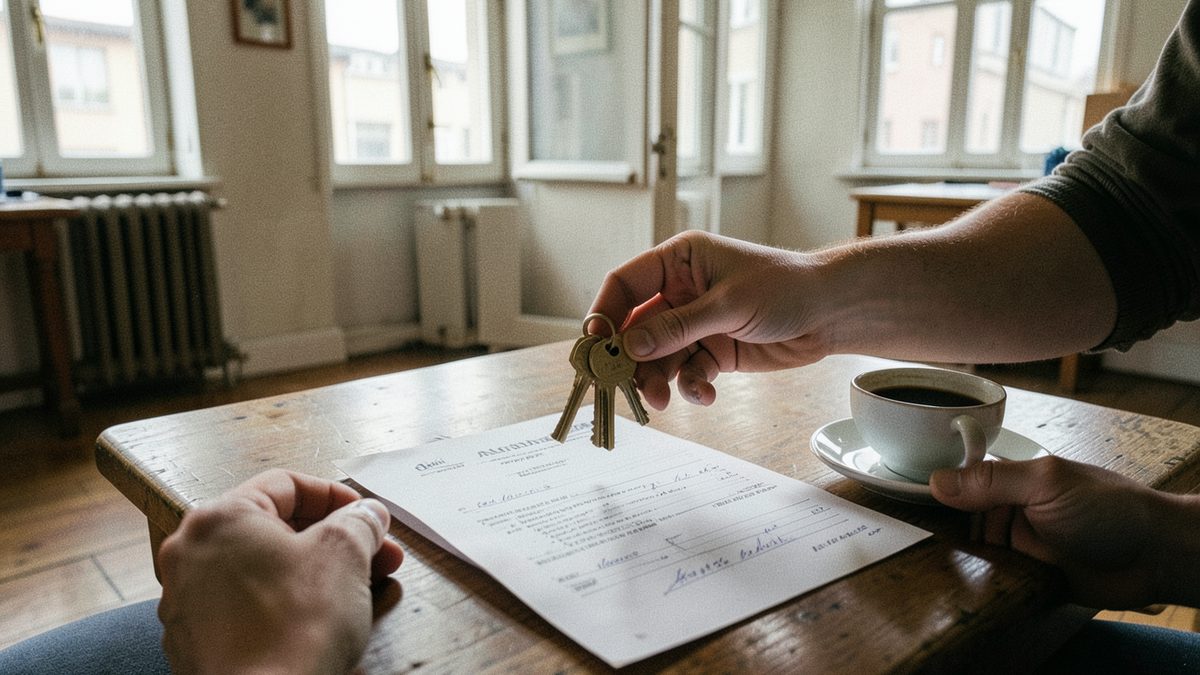
In Germany, a rental deposit (Mietkaution) may be at most three months’ net cold rent, you may pay it in three monthly instalments, and the landlord must keep it separate from their own money. When you move out, you get it back with interest, minus any justified claims the landlord has. This guide explains what that means in practice, how long the landlord may take to check, and what you can do if the money doesn’t come back.
What is a rental deposit in Germany?
The deposit is security for the landlord. If rent, service charges or damage are still unpaid at the end, they may take it from the deposit. Whatever is not needed belongs to you. So the deposit is not a fee: it is your money, parked for the length of the tenancy. With Berlin rents it quickly adds up to several thousand euros, so it is worth knowing the rules.
How much can a landlord ask as a deposit?
Under § 551 of the German Civil Code (BGB), the deposit may be at most three months’ rent, excluding the service charges that are listed as a flat rate or advance payment. What counts is the net cold rent (Nettokaltmiete), not the warm rent (Warmmiete, rent including service charges).
- Example: €950 cold rent plus €250 service charges makes €1,200 warm. The deposit may be at most 3 × €950 = €2,850, not €3,600.
- If the landlord asks for more, the excess is invalid. You can claim it back, even if you have already paid.
- Extra security on top, such as a parental guarantee in addition to the cash deposit, may usually not push the total above three months’ cold rent.
- A lower deposit, or none at all, is of course allowed. The limit only works upwards.
Can I pay the deposit in instalments?
Yes. The law explicitly gives you the right to pay the deposit in three equal monthly instalments. The first is due when the tenancy starts, the other two with the next two rent payments. You don’t have to apply for this or give a reason. A contract clause that rules out instalments or demands the full deposit before the key handover is invalid.
- With a €2,850 deposit, you pay €950 three times: at the start of the tenancy, with the second rent and with the third rent.
- Transfer the deposit with a clear payment reference, for example “Mietkaution Rate 1/3, Musterstraße 5, 2nd floor left”. Pay cash only against a receipt.
- Pay the instalments on time. If you fall behind on the deposit by an amount equal to two months’ cold rent, § 569 BGB allows the landlord to terminate without notice.
Important: only pay a deposit once you have seen the apartment and have the lease in your hands. Anyone who wants money before a viewing is almost always a scammer. More in Rental scams in Berlin.
How is the deposit paid and where is it kept?
Usually you simply transfer the deposit to the landlord or the property management (Hausverwaltung). They must then keep it separate from their own assets, typically in a deposit account (Mietkautionskonto, a kind of trust account). That protects your deposit if the landlord runs into financial trouble.
- Cash deposit into the landlord’s deposit account: the normal case.
- Pledged savings account (verpfändetes Sparbuch or Kautionssparkonto): the account is in your name and the landlord gets a lien on it. This only works if you both agree.
- Deposit guarantee from a bank or insurer (Kautionsbürgschaft): instead of money, you hand over a guarantee certificate. More on this below.
Do I get interest on my deposit?
Yes, the interest belongs to you. The law requires at least the usual rate for savings deposits with a three-month notice period, and you can agree on a different type of investment. The interest is added to the deposit and paid back with it. When rates are low this is often not much, but it is yours. You may ask where and how the deposit is held and ask for proof. One exception: in student and youth halls of residence (Studenten- und Jugendwohnheime), the landlord does not have to pay interest on the deposit.
Can the landlord use the deposit during the tenancy?
Only in very limited cases. According to Germany’s Federal Court of Justice (BGH), a landlord may not simply help themselves to the deposit during the tenancy for claims that are in dispute. The same applies the other way round: you generally may not “live off” the deposit by skipping your last months’ rent. Rent is paid normally until the end, and the deposit is settled afterwards.
When do I get my deposit back after moving out?
There is no fixed legal deadline. After you move out, the landlord may take a reasonable amount of time to check whether anything is still owed. Courts often consider three to six months reasonable, though it can be shorter or longer depending on the case. After that, the landlord must settle up: deposit plus interest, minus justified claims.
Service charges (Nebenkosten) are a special case. If the service charge statement (Betriebskostenabrechnung) for the last year is still pending and an additional payment is likely, the landlord may hold back a reasonable part of the deposit for longer. The rest must be paid out. The statement itself must reach you no later than twelve months after the end of the billing period (§ 556 BGB). The size of the retained amount is often based on the additional payments of previous years.
What can the landlord deduct from the deposit?
- Unpaid rent or unpaid service charge balances.
- Damage beyond normal wear and tear, such as a cracked washbasin or burn marks in the parquet.
- Cosmetic repairs (Schönheitsreparaturen) only if the clause in your lease is valid. Many older clauses are not, so have it checked by a tenant association (Mieterverein).
The landlord may not charge for normal wear and tear from ordinary living: slightly worn floors, faded walls, a normal number of small drill holes. Who left which marks can only be settled later with evidence. That is why the handover protocol (Übergabeprotokoll) matters so much, both when you move in and when you move out. What to note down from the very first viewing is in our viewing checklist.
What to do if your deposit is not returned
If after a few months there is neither money nor a statement, go step by step:
- 1. Check your documents: lease, proof of deposit payment, handover protocol, photos, meter readings.
- 2. Write to the landlord, ideally by registered letter (Einschreiben) or by email with a read receipt. Ask for the deposit statement and refund including interest, set a concrete deadline such as two weeks, and give your bank details. Writing in German is not required, but it often speeds things up.
- 3. If the landlord deducts something, ask for every item to be justified and compare it with the handover protocol.
- 4. Get help: Berlin tenant associations (Mietervereine) and tenant advice services know these cases very well, and some also advise in English. Legal expenses insurance for tenancy matters (Mietrechtsschutz) can cover lawyer’s fees.
- 5. If the landlord still refuses, a court payment order (gerichtliches Mahnverfahren) or a claim at the local court (Amtsgericht) are options. Discuss whether and how with a tenant association or a lawyer first.
Don’t let it sit for years: the claim to get your deposit back can become time-barred. A legal advice service can tell you how the deadline runs in your case. If the building was sold during your tenancy, the new owner is usually responsible for the refund. If you can’t get it from them, § 566a BGB says the former landlord remains liable too.
Leaving Germany? Make sure the landlord has bank details that will still work, ideally an IBAN, and an email address where you can be reached for the final statement.
Can you rent without a deposit?
There is no right to an apartment without a deposit, but there are ways to avoid paying the whole sum at once. The best-known alternative is a deposit guarantee (Kautionsbürgschaft): a bank or insurer guarantees the amount to the landlord, and you pay an annual fee that you don’t get back. The landlord has to agree. Over several years this can cost more than a cash deposit, so do the maths.
- Use the instalments: they are your right and take the pressure off the moving month.
- If you receive benefits from the job centre (Jobcenter) or social welfare office (Sozialamt), ask them whether they can cover the deposit, usually as a loan. Apply before you sign, otherwise you risk a refusal.
- Some landlords waive part or all of the deposit, for example if they already know you. Asking costs nothing.
We have collected all the options with their pros and cons in Renting without a deposit.
Deposit and successor tenants: who gets what?
If you move out and a successor tenant (Nachmieter) takes over your apartment, you settle your deposit with the landlord, not with the successor. The successor pays their own deposit to the landlord. Private deals like “you give me my deposit and I leave mine in place” easily lead to disputes. How a fair handover works is explained in Finding a successor tenant in Berlin.
Deposit and finder fee are two different things
You get the deposit back at the end. A finder fee (Finderlohn) on Kiezfinder is the reward for a finder who gave you the decisive tip about your apartment. It is agreed in advance, is at most two months’ cold rent including VAT, and is only due if you actually sign the lease. Kiezfinder itself takes no finder fee. Why the limit is two months’ cold rent is explained in the two-month rule. Budget for the deposit, the move and any finder fee together, and there are no surprises when you move in.
Note: this article is not legal advice. For specific disputes, Berlin tenant associations (Mietervereine), tenant advice services or a tenancy lawyer can help.
Part of the guide: Moving to Berlin →